Maquette Paintings
Every picture here was made by AI models writing code: a small 3D stage built in JavaScript and GLSL, lit in HDR, then painted with brush strokes placed on its surfaces. No photos, no image models, no downloaded assets.
The painting that re-lights
A grey 3D stage, the strokes landing, then the sun moves from dusk to a blood sun to moonrise. Every one of the 34,843 strokes stays where it is; only its colour changes. 16 seconds, silent.
Try it yourself: drag the slider.
Stage, light, strokes

1 · A stage in code
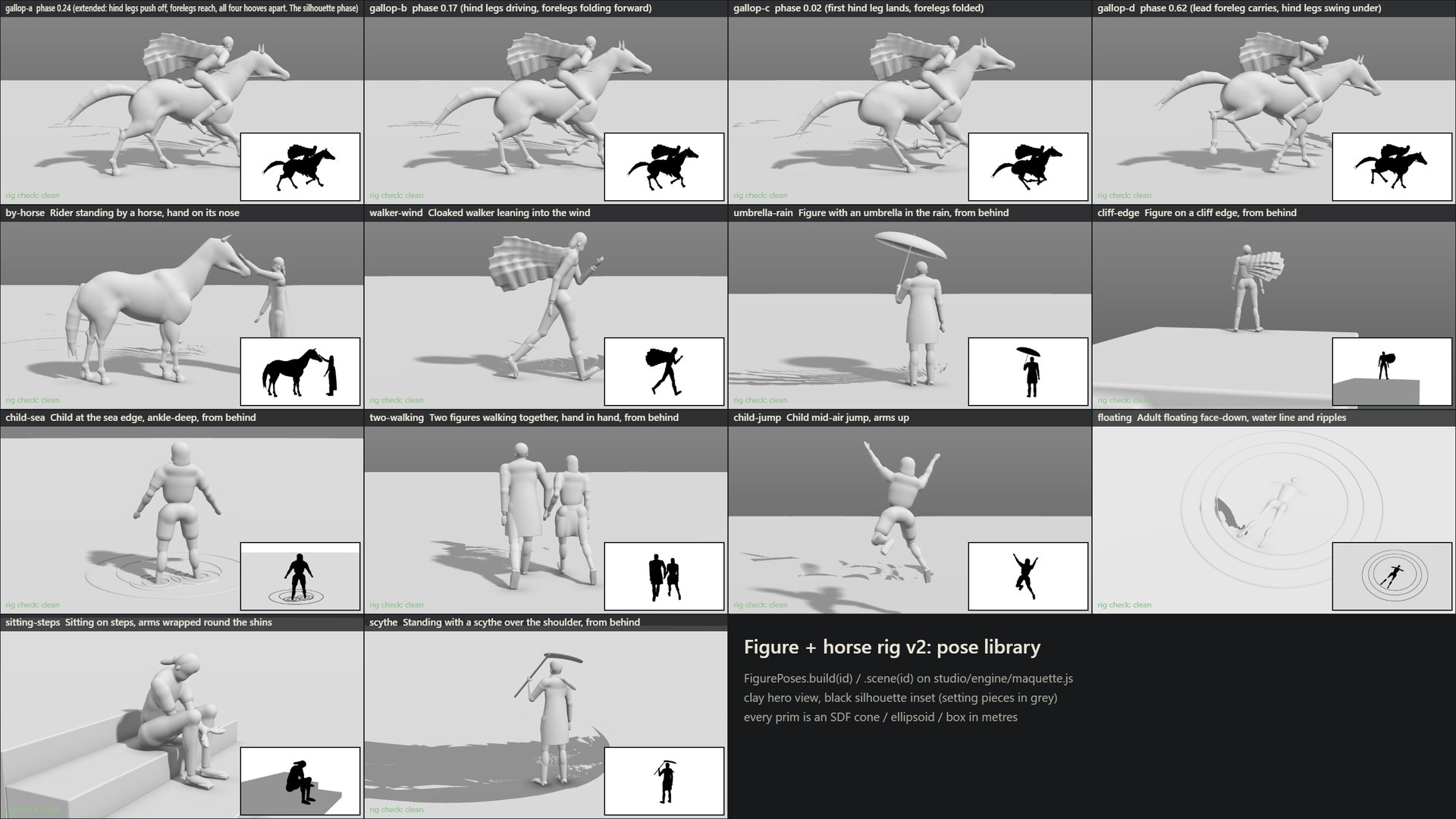
Shapes and meshes on the GPU: real camera and lens, real shadows and contact. Rigs pose hands, bodies and a galloping horse by joint angles.
2 · Light first
Suns, lamps and flames at 8 to 16 times paper white, glow only from those, haze by depth behind the hero, rim light, light through thin petals and fingers.
3 · Strokes, then taste gates
One flat colour per stroke, seeded on the 3D surfaces. Every frame is measured against a personal Pinterest taste board, then hidden among human-made pictures for a "spot the code" test.
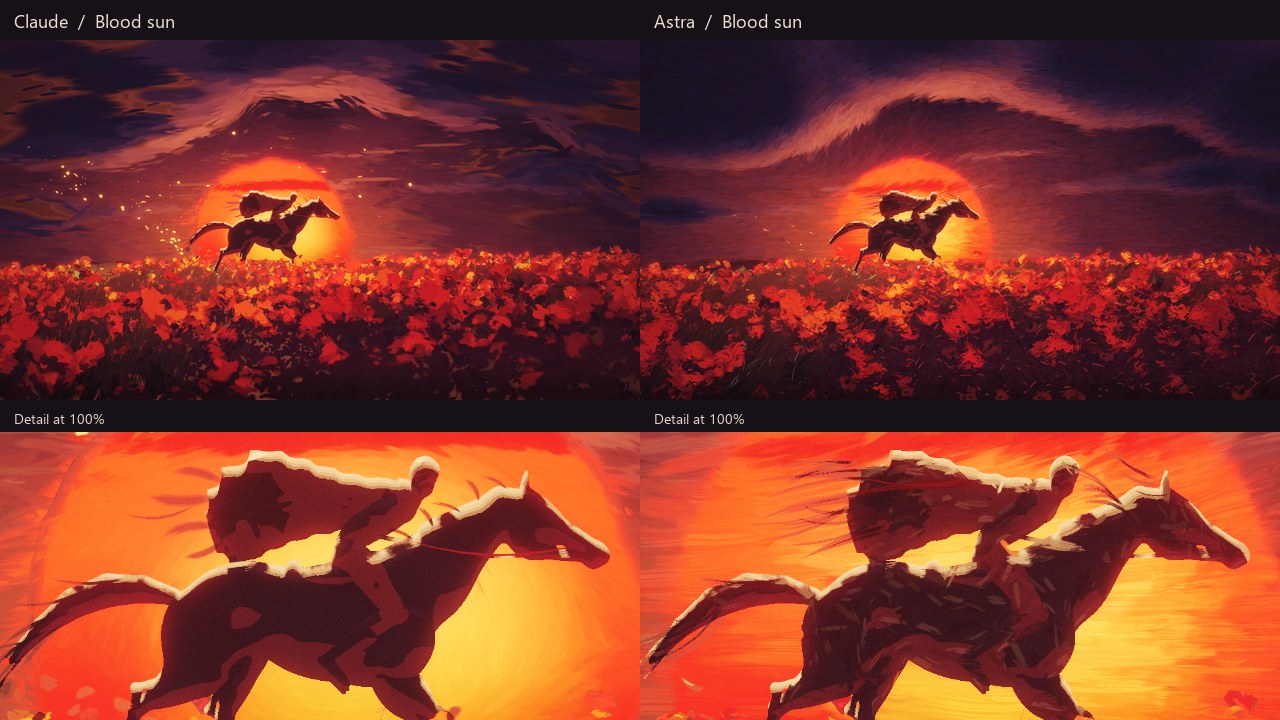
Same 3D stage, a second brush
Claude built the rider's stage and light. GPT-6.2 Astra kept both and replaced only the brushwork: a split flat brush pulling the sky into one sweeping cloud, short touches of red light describing the horse. 27,363 of her marks, and the scene still re-lights.
The wallpapers
Tap a picture to see it large. Every one is a 2560 × 1440 desktop wallpaper.
Hidden among human-made art
Each final was put in a 3 × 3 sheet with eight human-made pictures from a personal Pinterest taste board, and an AI judge (Claude Opus) was asked which one was made by code, then to rank all nine as wallpapers. One judge, and results move with the set of pictures, so treat single rows as noisy.
| Piece | Picked out? | Wallpaper rank |
|---|
Hands and bodies from joint angles
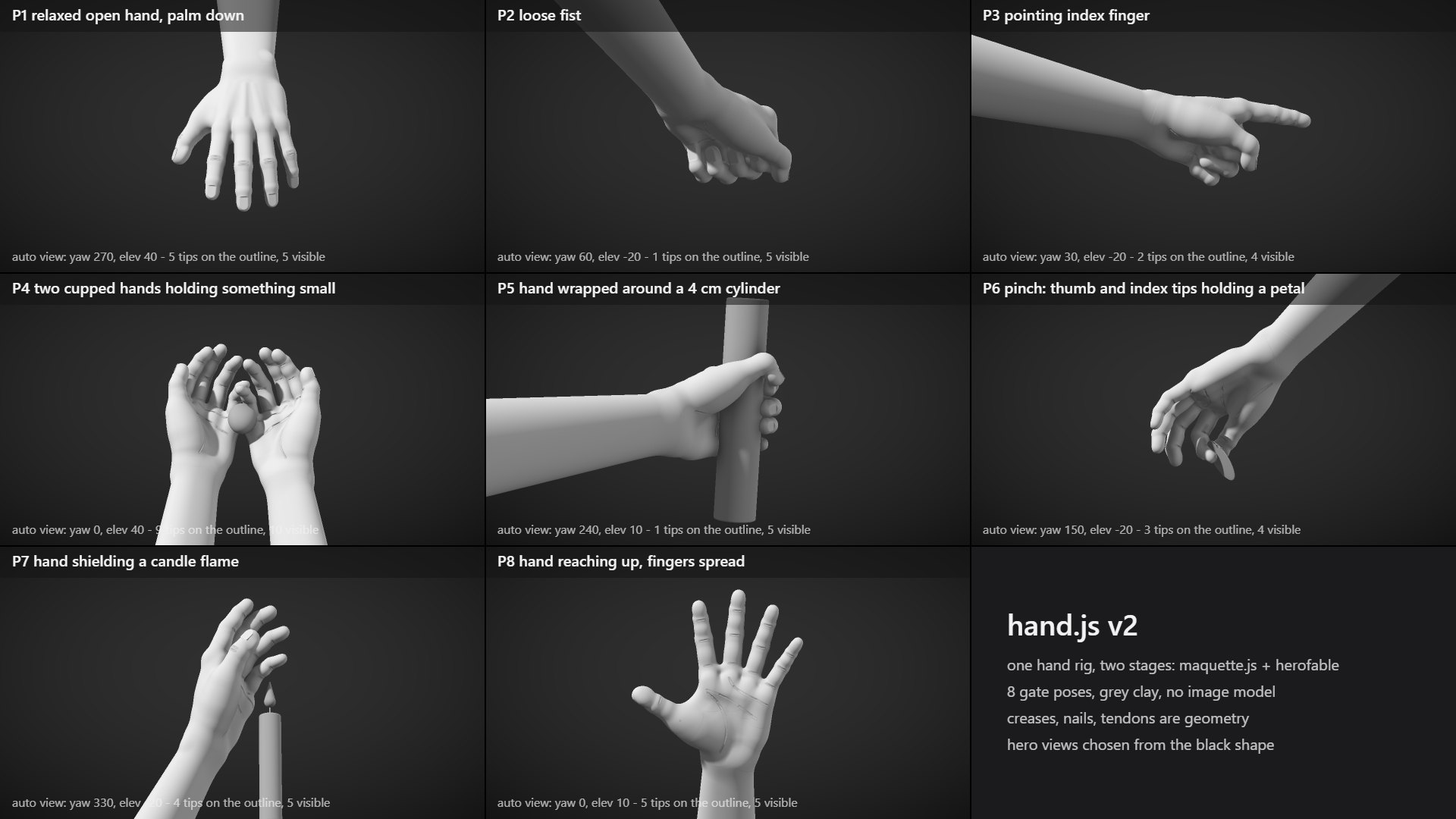
Bone lengths from anatomy data, joint limits, contact solved so fingers really touch the cup or petal. Measured against Gray's Anatomy plates, the best hand fixes cut the outline error from 2.78 to about 1.3 mm, but a fair blind test could not see the difference, so they stay switched off. Outlines read right; up close the hands still look like clay.
What worked, what did not
Worked
- Lighting first: wave 1 landed in the taste board's ranges 3 of 19 times; all 33 finals do.
- One scene, any light: rider, farm and poppy re-light with every stroke in place.
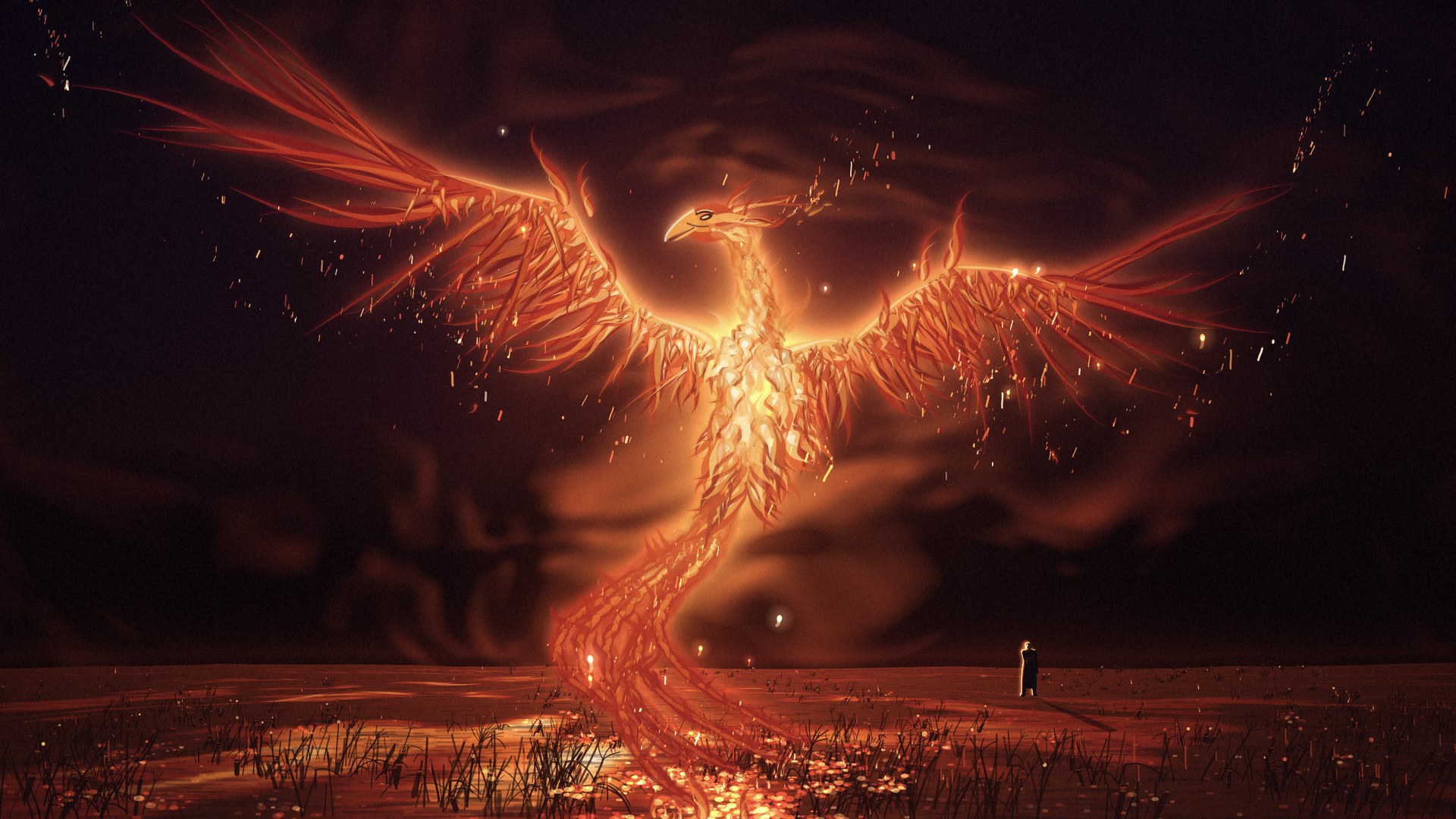
- The phoenix ranked 1st of 9 against human-made fire pictures; the Vinland farm was never picked out in any run; Astra's red field ranked 2nd of 9.
- Correct outlines for hands, bodies and a gallop from any camera angle.
- New subjects (ghats, forest, rain, black hole, storm) all carried the light and depth.
Not yet
- Most finals are still picked out at thumbnail size. What fools the judge is composition: one bold subject against one huge light, not finer brushwork.
- Up close, hands and figures still look like smooth clay.
- AI judges are a weak stand-in for taste: tested against a person's own ranking, they did no better than chance.
- Painting from a 3D render is 30 years old; what is new is models writing stage, rigs, light and strokes with no assets.